
Like this? Follow me:
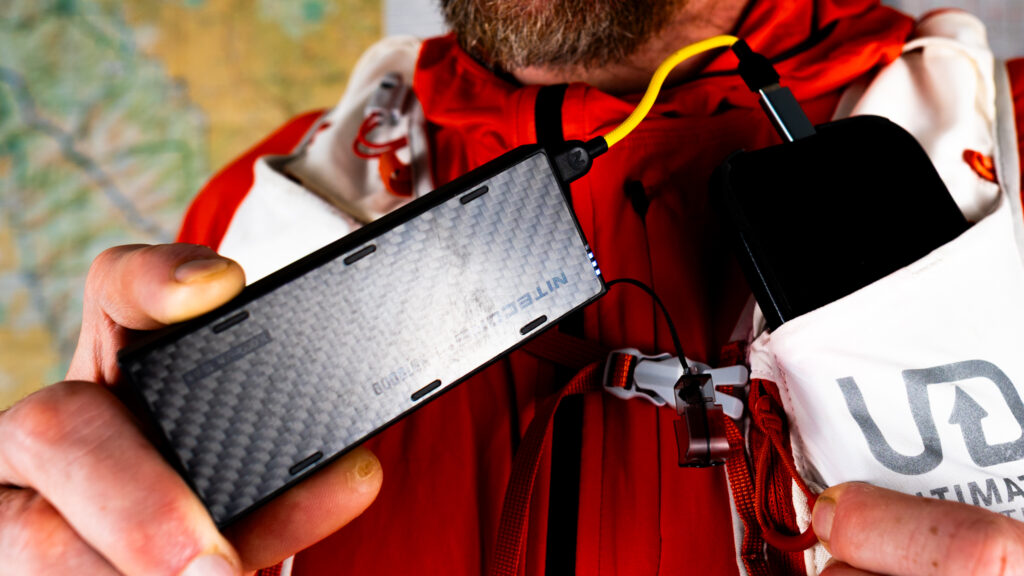
Nitecore’s new ultralight power bank, the NB 10000 Gen4, comes with some heavy-hitting features usually found on larger and heavier models: high speed recharging, high speed charging, dual device charging, pass through charging – and what may be most interesting to travelers and battery-maximizers: Eco Mode.
But is it worth your money to buy or upgrade from a previous model/competing product? Let’s take a look! And while we investigate, I’ll do some comparisons with Nitecore’s previous generation of the NB 10000, the Gen3, as well as Nitecore’s Carbo 10000 Gen2 Pro: a more robust power bank, which trades more durability and performance for a slightly heavier build.
Interface
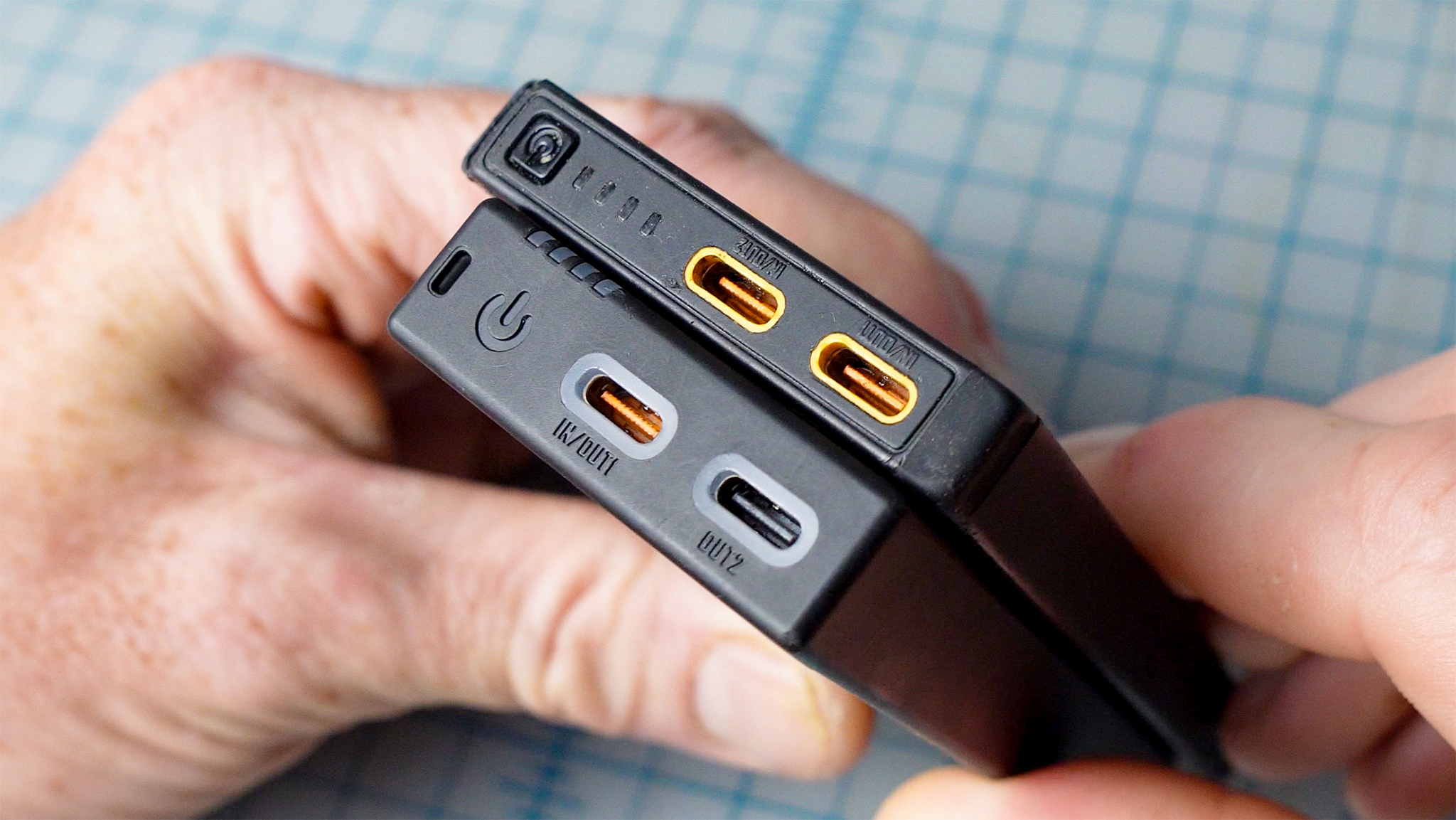
The interface of the NB 10000 Gen4 is simple. One touch-sensitive button is located on the left hand side of the power bank which when “pressed” will illuminate both the array of blue LEDs on top which represent stored charge (more lights: more charge) as well as illuminate around the two USB-C ports. Note: you do NOT need to press the power button to initiate charging another device; simply plugging in USB-C cable and device will be enough.
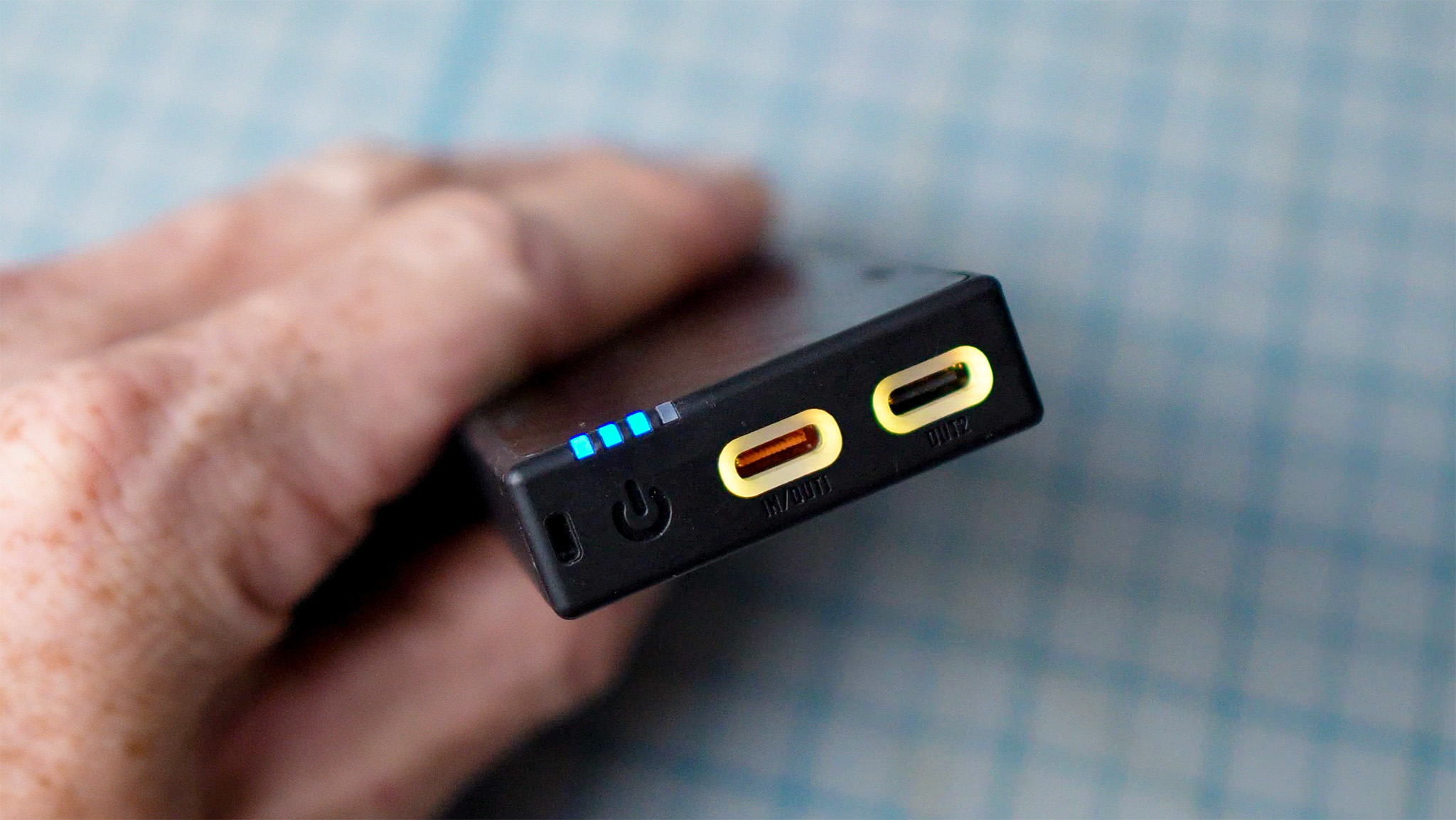
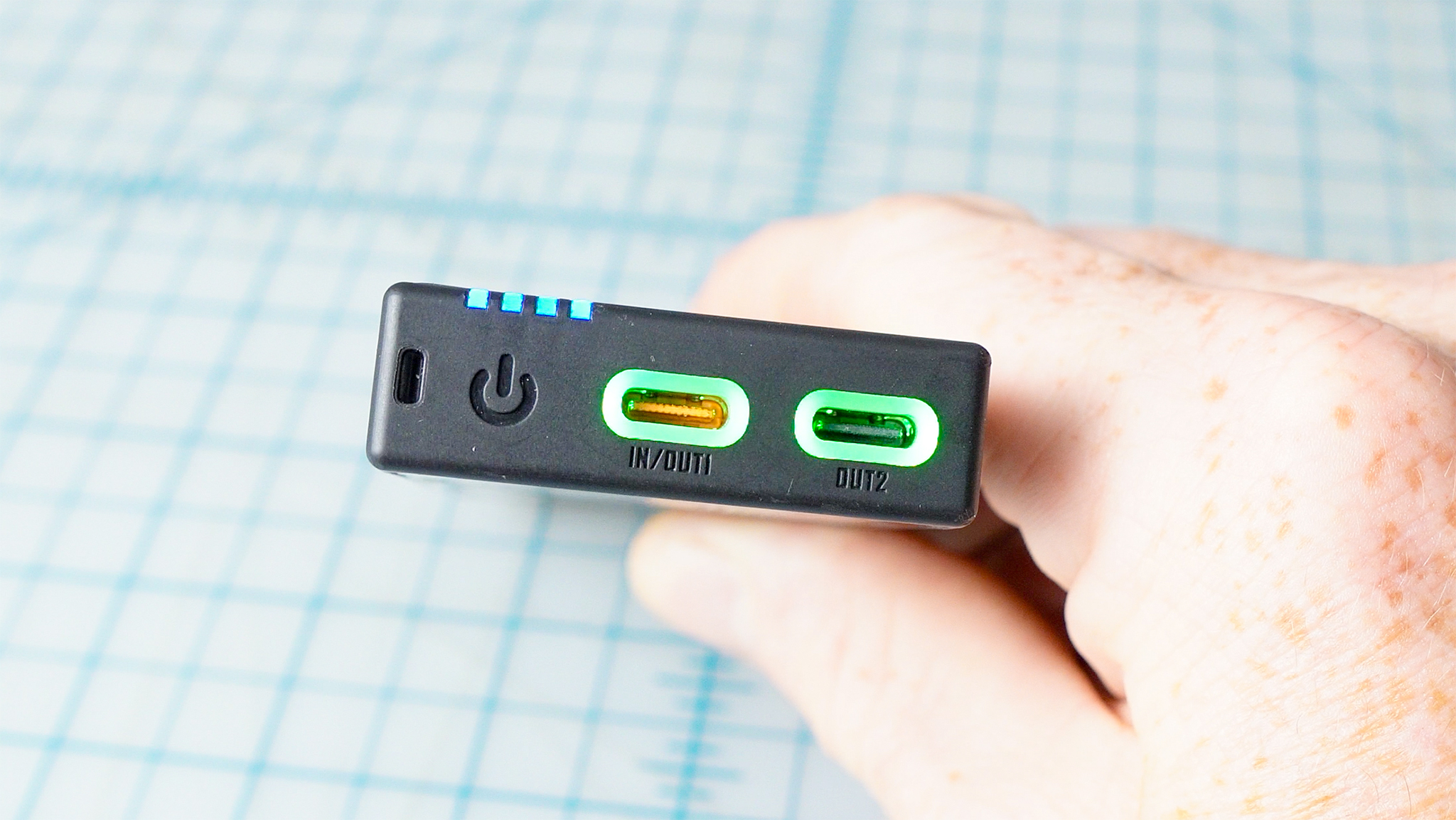
The color of the lights around the two USB-C ports represent what mode the power bank is in: orange for normal mode and green for Eco Mode. You may switch between normal and Eco Mode by first pressing the power button, then pressing and holding the same button until the lights change color – takes around 10 seconds. If you just press the power button, the rings around the USB-C ports will turn orange or green, but then change and illuminate in a rainbow of colors in a fanciful way.
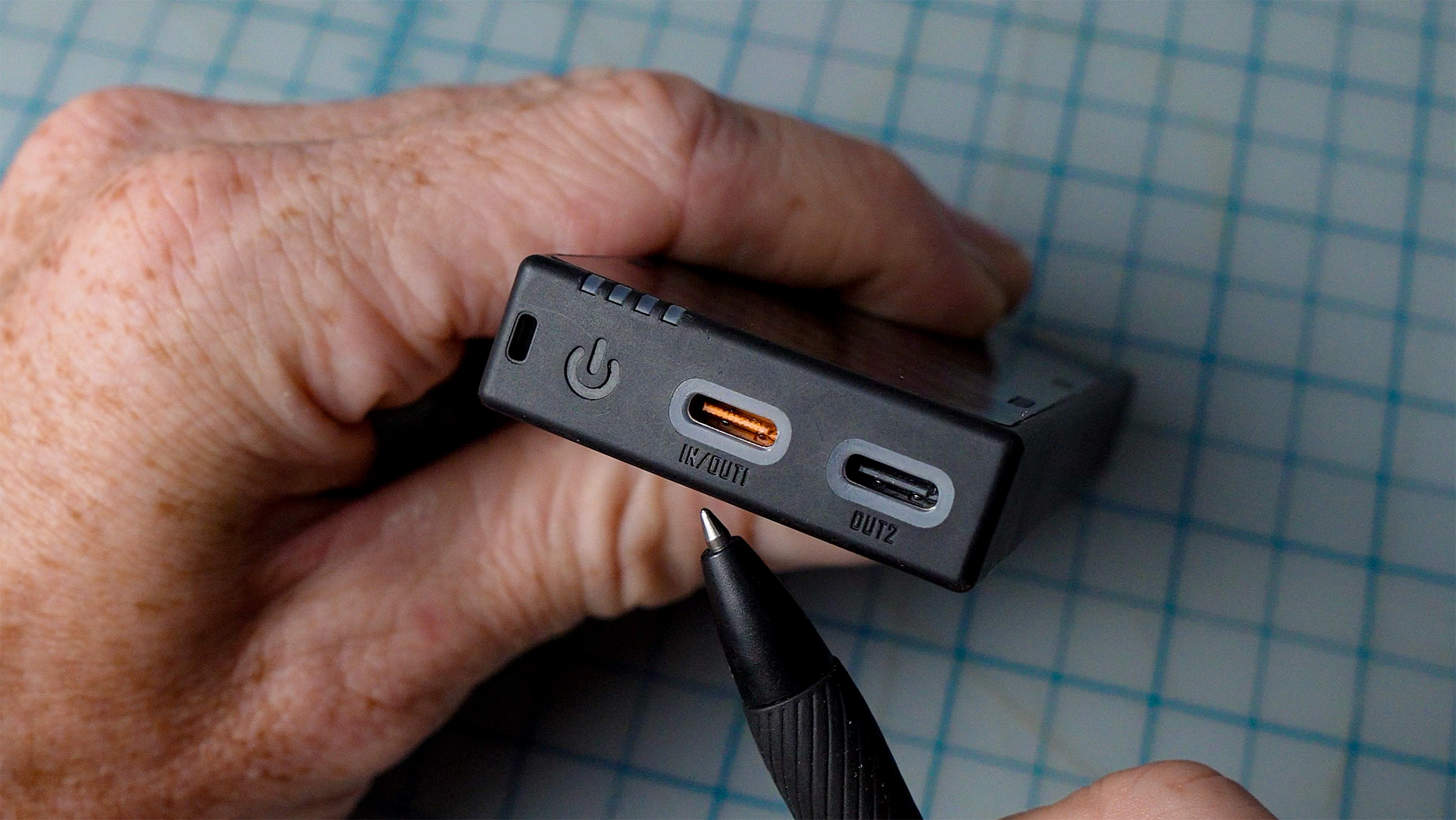
Although there are two USB-C ports on this power bank that can be used to charge devices, only the leftmost port nearest to the power button can be used to recharge the power bank itself. It is labeled on the power bank (IN/OUT) but the text is small, and it is easy to get these two ports mixed up.
The power button isn’t really press-able, only being touch sensitive, so there is no real way the button can be pressed in your pocket or bag to mistakenly change power modes. There is no lock-out mode in this power bank as well. The LED lights take up a very small charge themselves, and shouldn’t really affect runtime of the power bank itself.
When you do plug in something to charge using the NB 10000 Gen4, the ports and blue capacity LEDs will illuminate on their own, showing you that the power bank is working. Unfortunately, those blue LEDs never turn off, which is a minor gripe if you keep the power bank near you when sleeping in a tent: they will slightly illuminate the space around you.
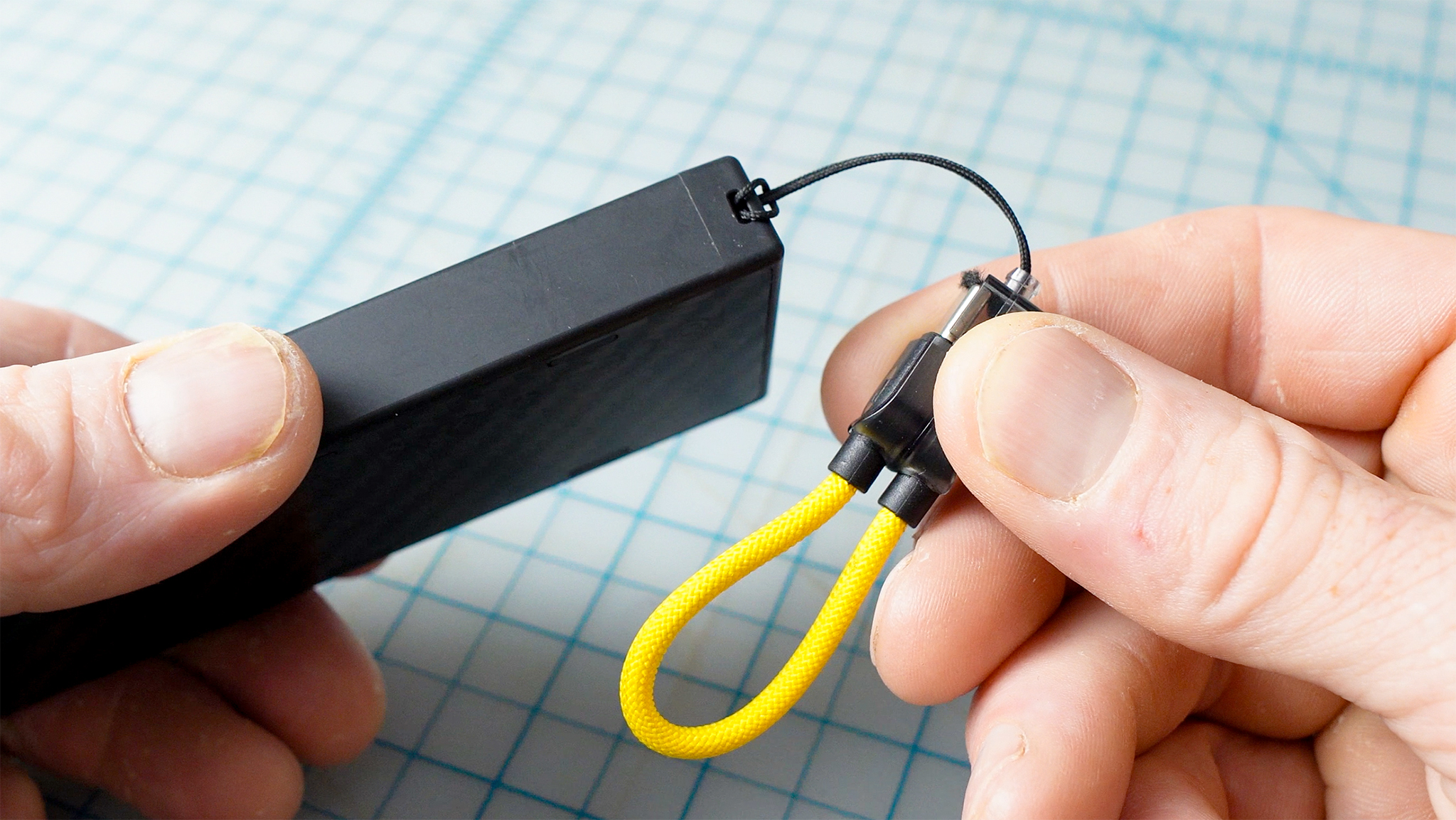
Finally, besides the power button is also a small hole to thread and hitch a lanyard that holds a short USB-C cable that comes with the power bank.
Weight
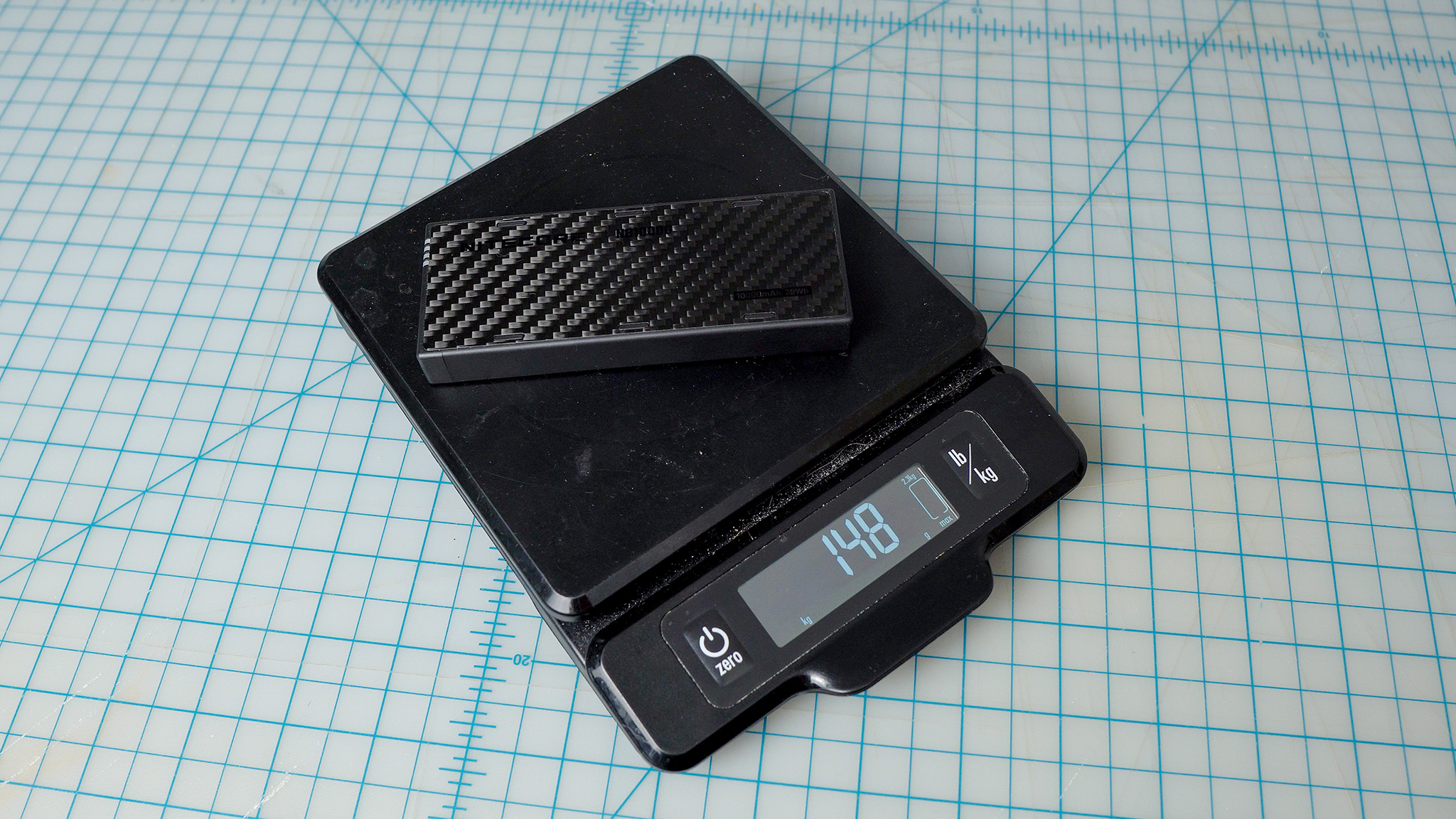
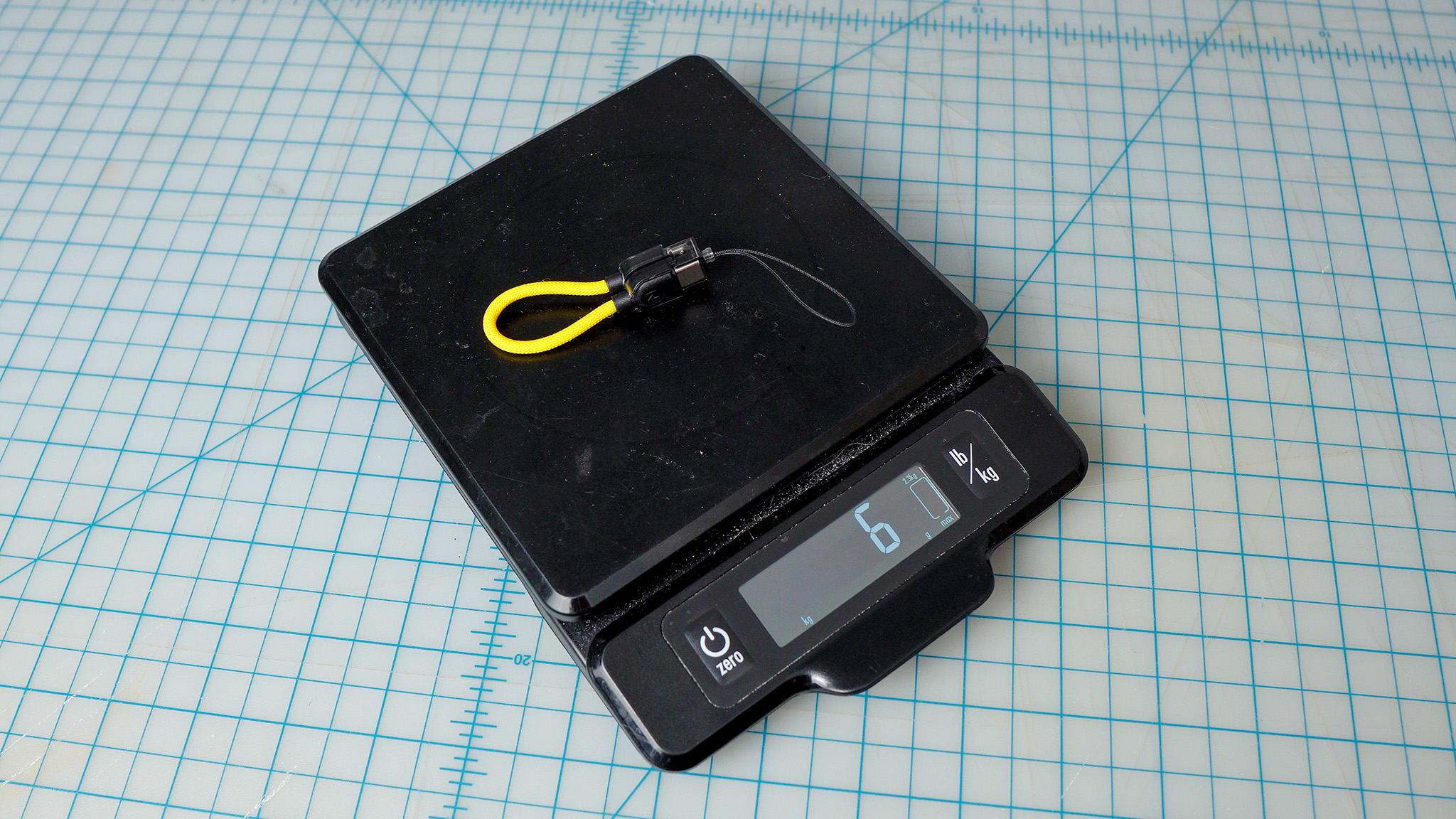
Being a self-powered athlete, weight is often the “make or break” feature for me: if a product is too heavy, I’ll look for alternatives. On my scale, the Nitecore NB 10000 Gen4 comes in at a svelte 148 grams. Compared to the Gen3 of this power bank’s 151 grams and the Nitecore Carbo Gen2 at 173 grams, this power bank edges them both out. The small lanyard with high-speed USB-C cable that’s also bundled with this power bank comes in at 6 grams.
Energy Capacity
The Nitecore NB 10000 Gen4 is advertised with a 39Wh capacity, compared the Gen3’s 38.5Wh and the Carbo Gen2’s 38.8Wh. So, all of them are in the same ballpark. To test the manufacturer’s claims, I performed a discharge test at 1A, 5V (5W) to see what the real world capacity really is.
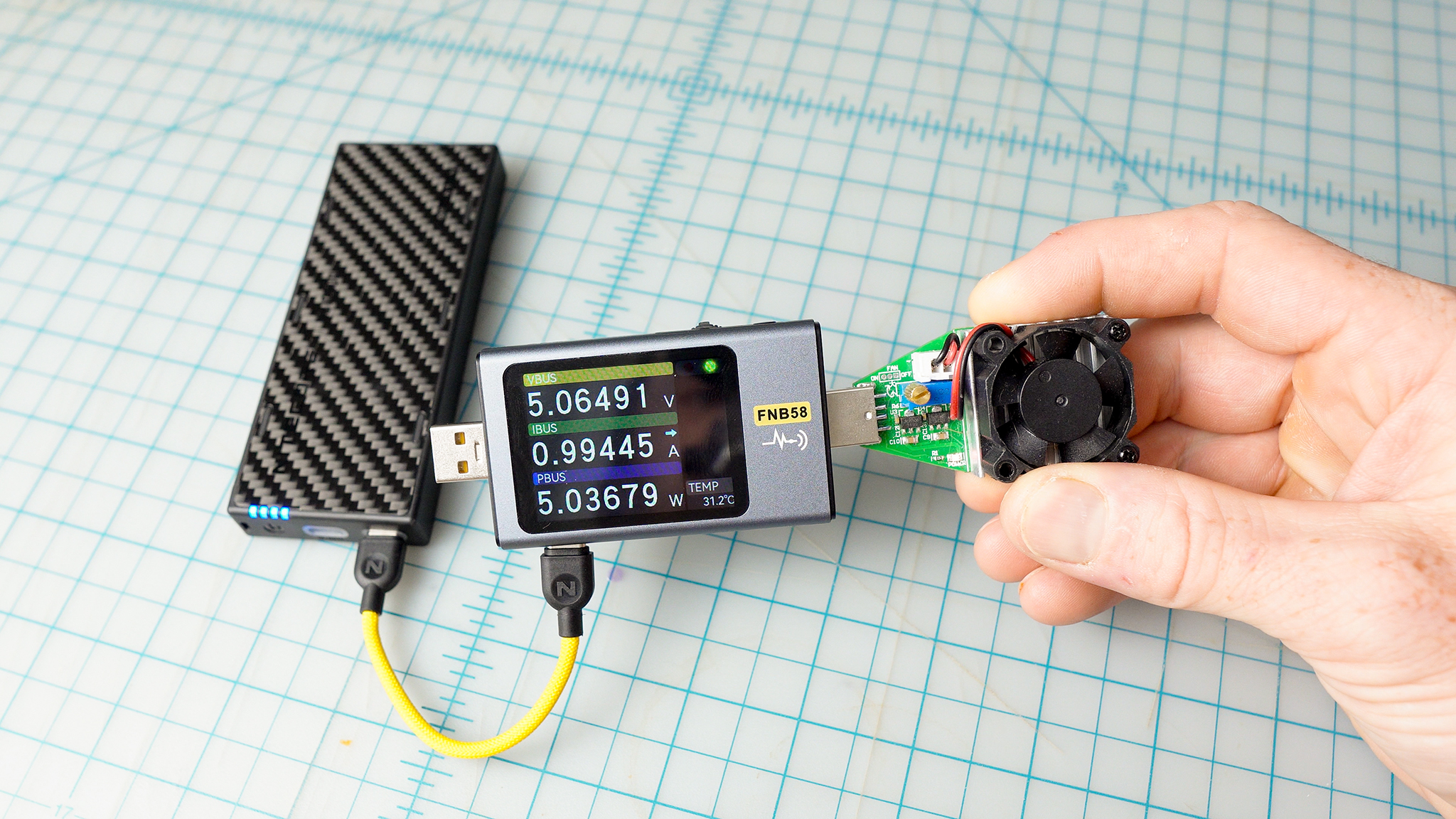
Note: real world capacity will always be lower than the manufacturer’s claims. Nitecore does acknowledge this themselves, and they list this as “Rated Energy”, but in mAh, not Wh. But since this power bank is sold as a 10,000 mAh and the rated mAh at 7,200mAh (when drawing 5W), we can deduce that they consider this power bank have a 72% efficiency. What did we find?
In my at-home test, I found that the NB 10000 Gen4 had 34.8Wh of real world capacity, compared to the 39Wh capacity advertised. This is a 88.6% difference when comparing advertised and real-world findings, which actually beats Nitecore’s own claims. Comparing our results with similar tests done with the NB10K Gen3 and Carbo Gen2:
| Rated Capacity (Wh) | Tested Capacity (Wh) | Tested Wh/gram | |
| NB 10000 Gen3 | 38.5Wh | 35.007 Wh | 0.233 Wh/gram |
| Carbo 10000 Gen2 | 38.8Wh | 35.987 Wh | 0.212 Wh/gram |
| NB 10000 Gen4 | 39Wh | 34.8Wh | 0.235 Wh/gram |
We’re seeing very, very similar capacities between the three products and almost the same capacity/weight.
Recharging Speed
Recharging speed was tested by plugging the device into a high power and high quality power source that exceeds the highest wattage the NB 10k Gen4 supports (22.5W) and once again using an inline power meter to measure readings every few seconds. The results were interesting:
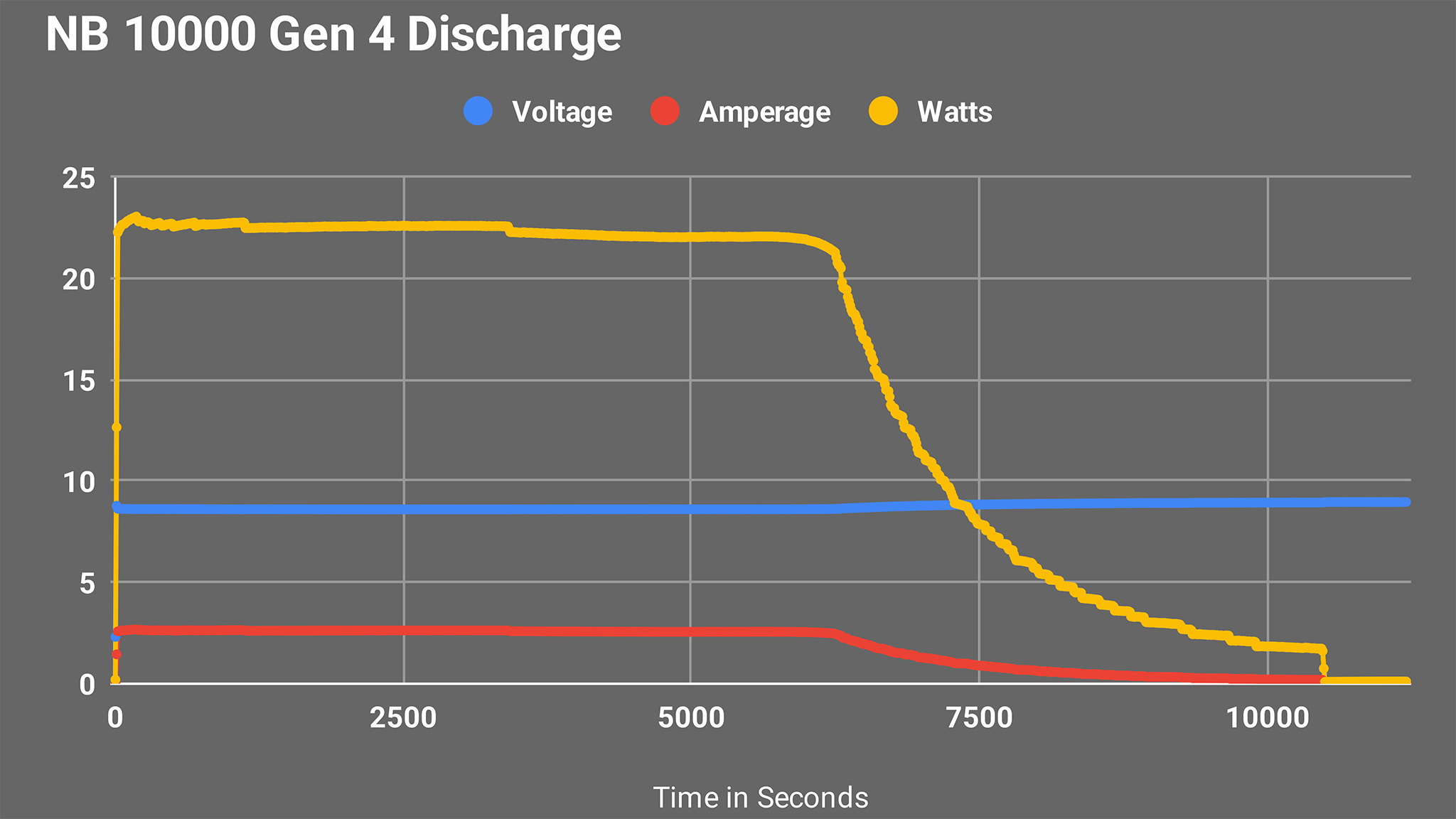
In total, it took 3 hours, 6 minutes, and 33 seconds to fully recharge the NB 10000 Gen4 power bank and approx. 46.38 Wh. 82.83% capacity was attained at a speed of approx. 22.5W – the fastest charge supported – taking 1 hour, 43 minutes, and 6 seconds. The remaining 17.17% of capacity was recharged at an ever decreasing power, taking 1 hour, 23 minutes, and 27 seconds. This wattage curve dip at the tail end is a normal occurrence when charging most electronics.
Comparisons to the Gen3 are pretty stark, as the Gen3 has a lower max recharging rate of 18W compared to the Gen4’s 22.5W. Roughly, the Gen3 was tested to sustain that max recharging rate for 1 hour, 36 minutes, and fully recharging in 3 hours and 16 minutes. A reasonable speedup for the Gen4. The Carbo Gen2 performed better than either, as it supports a max recharge speed of 24W, recharged at that max for 1 hour 11 minutes, and fully topped off in 2 hours 28 minutes.
Maximum Output Charging Rate
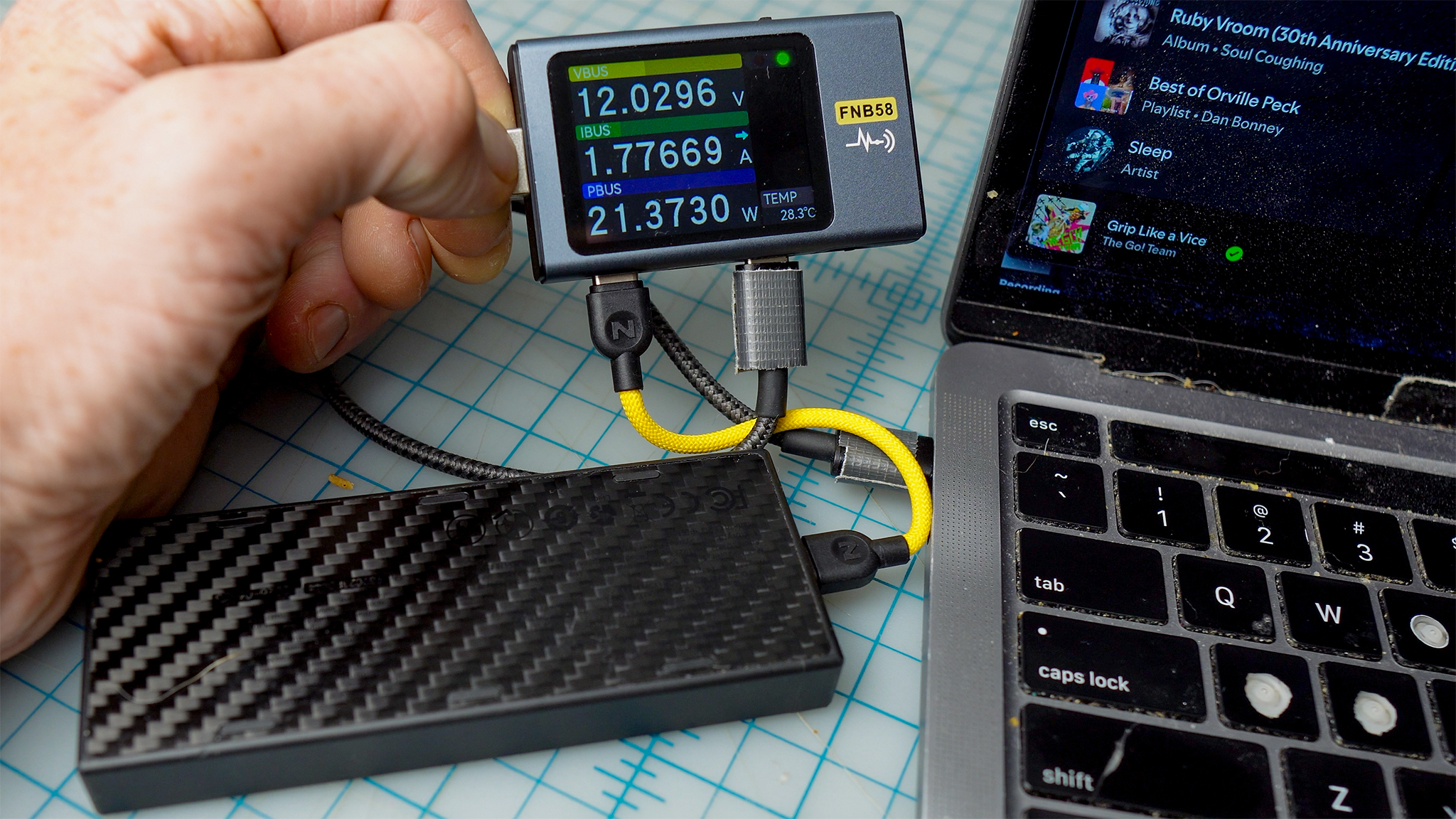
The NB 10000 Gen4 is advertised to have a maximum charging rate of 22.5W. Our real-world tests showed approximately 21.4 Watts max, a difference of only 1.1 Watts. This marginally beats out the Gen3 we tested previously.
| Advertised Max Charging Rate | Tested Max Charging Rate | Difference | |
| NB 10000 Gen3 | 22.5 W | 19W | 3.5W |
| Carbo 10000 Gen2 | 30 W | 28.65W | 1.35W |
| NB 10000 Gen4 | 22.5 W | 21.4 W | 1.1W |
Max Output Charging Rate with Two Connected Devices
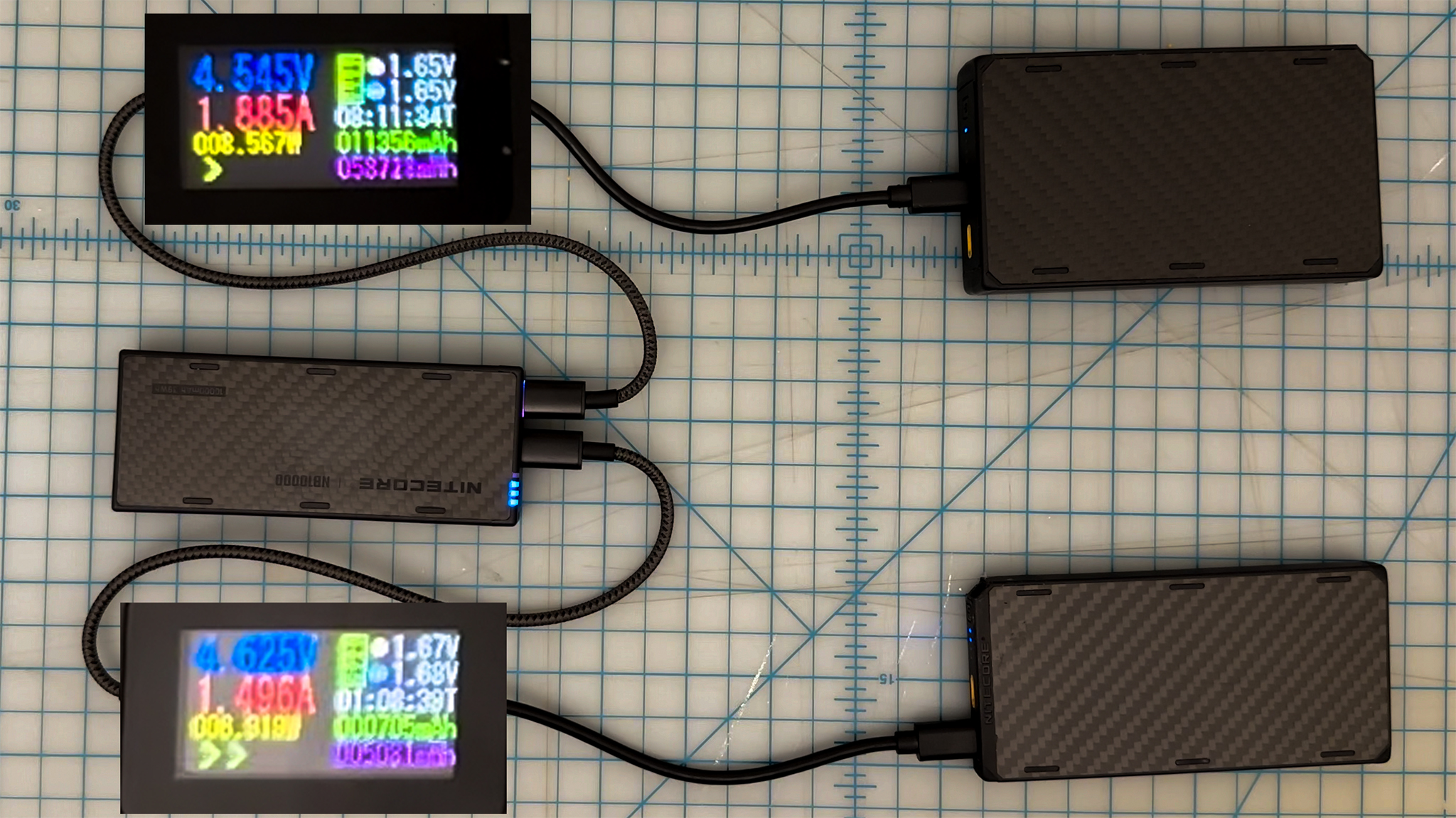
Gen4 of the NB 10000 supports charging two devices at once, but there is a major caveat. Max speed drops from 22.5W advertised with one device to a total of 15w shared between the two devices. In other words, expect charges of approx. 7.5W on each device.
The Gen3 of the NB10000 did advertise the same 15W shared max output between two devices, although I have previously tested it at 18W. The Carbo Gen2 also advertises at 15W, which is what it is seen to perform at.
Pass-Through Charging Support
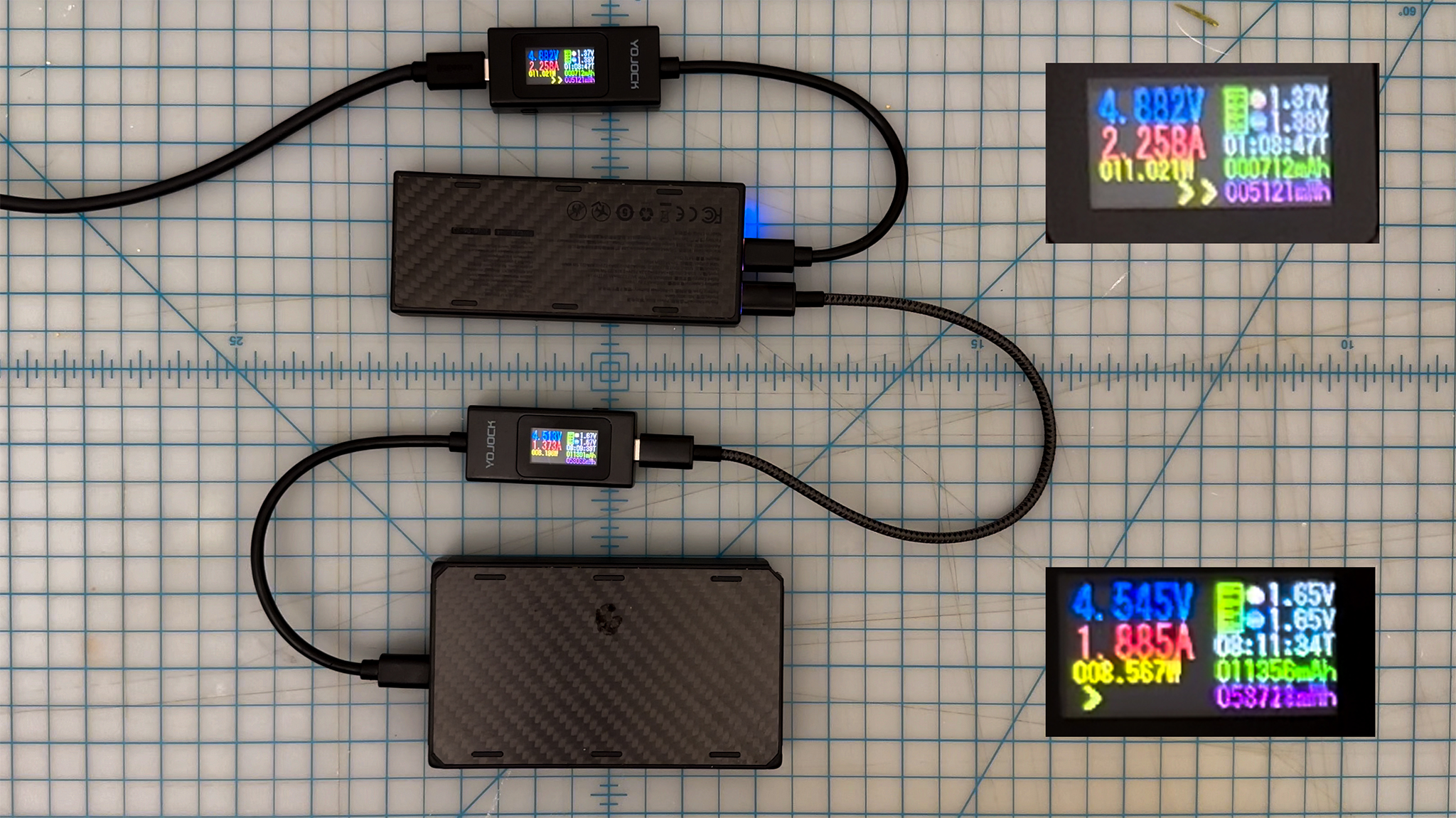
Pass-Through charging support is officially supported on the NB 10000 Gen4, but like dual charging, max speeds of both recharging and charging a device are lowered. Heat accumulation is most likely a big problem that keeping both recharge and charge speeds lower is trying to prevent. The manual specs. that max charging of another device is limited to 10W, although our tests couldn’t get much above 6.2W, and recharging speeds not surpassing 11W. It’s not explicitly stated what the max recharging speed actually is, but we’re guessing the spec. is between 15W and 18W.
Eco Mode
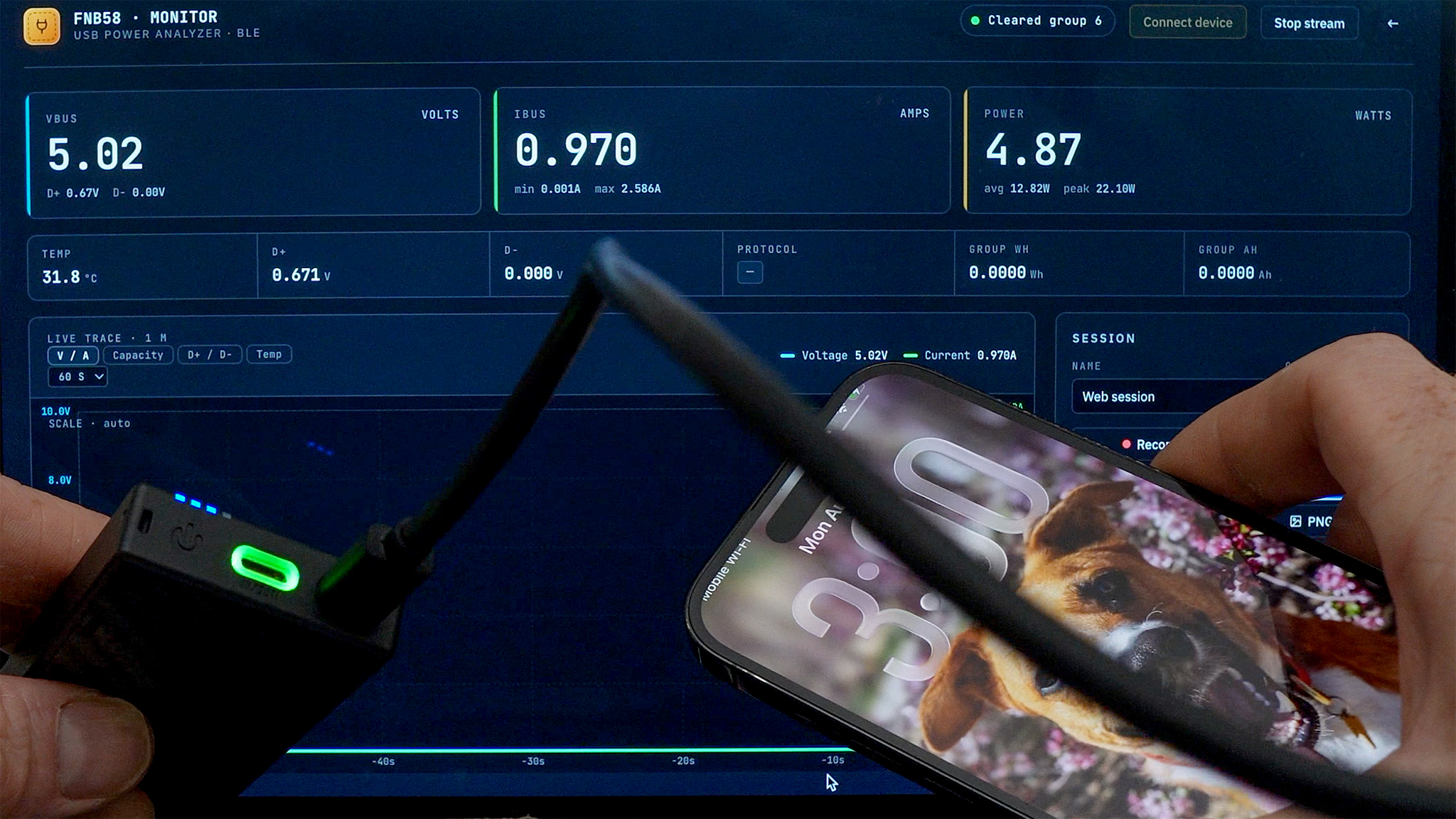
Unlike the Gen3 or the Carbo Gen2, the NB 10000 Gen4 supports a bona fide Eco Mode! Eco Mode lowers the max charging speed from the 22.5W advertised to just 5W, in an attempt to minimize inefficiencies found in those higher powered charging speeds. Eco Mode can be enabled using the interface on the power bank itself by pressing and holding the power button until the ports turn green.
One thing to understand with Eco Mode is that it’s not something required for you to do for low powered devices. Older devices won’t support high charge rates anyway, and newer USB-C devices that only require low power will be built to negotiate the correct charge already. Where Eco Mode really comes into play is with high powered devices that want to negotiate a high rate of charge, but with Eco Mode enabled, will allow received a low rate of charge. This works great on something like my phone, which can use a lower powered source, but wouldn’t work well on my Macbook, which really needs more than 5W to offset the amount of power it drains just running.
I didn’t test the difference in charging capacity using a discharge test, as my USB dummy load only supports what Eco Mode allows, 5W. This may be an interesting test to do in the future.
Nitecore advertises Eco Mode will garner you an additional 400 mAh of capacity, which sounds great, but is only a modest 5.7% improvement over letting the powerbank charge full hog. Still marginal gains are better than no gains at all, and Eco Mode is probably what I would set and keep this power bank at while backpacking, unless there was a really good reason not to.
IPX7 Weather Rating
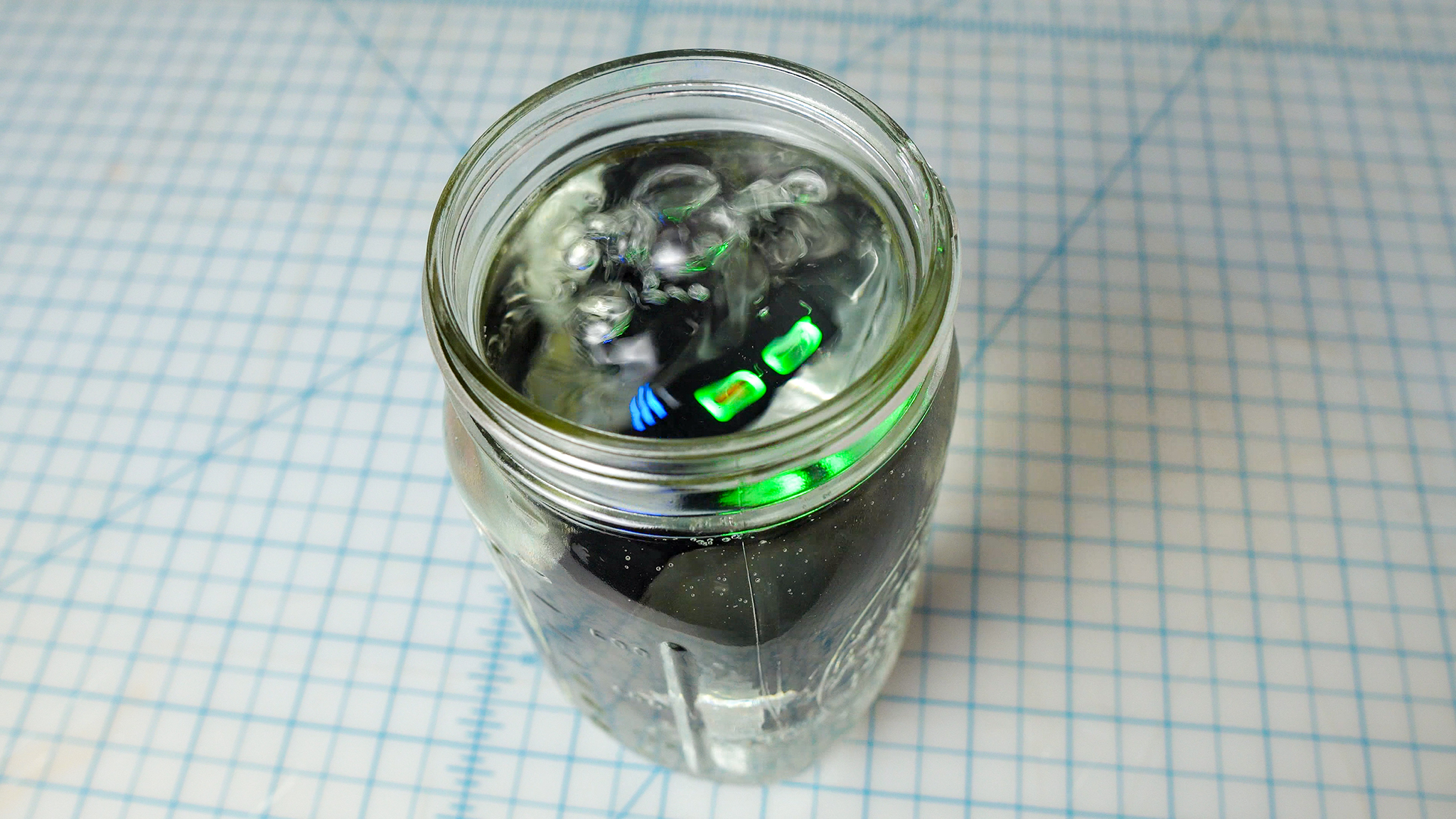
Gen4 of the NB 10000 features a big upgrade to weatherproofing with a IPX7 rating, compared to a IPX5 for the Gen3. IPX5 roughly translates to being able to withstand an indirect rainstorm, while IPX7 equates to being able to handle a full immersion. Obviously I tested this by dunking it in a full glass of water. The power bank will get wet and curiously, the USB-C ports will show an additional “red” mode that’s not covered in the manual, but which I interpreted as, “don’t plug anything in – too wet!”. A good shake, and an air dry for a couple of minutes, and the power bank worked as well as before.

IPX5 rating is probably pretty good for most applications like backpacking, but if you’re particularly accident-prone (like I am) or are traveling in very wet climes, you may benefit from the extra added protection. Of course, the Carbo Gen2 has even better, IPX8 protection! The difference between IPX7 and IPX8 isn’t specifically defined by Nitecore, but think of IPX8 as being a little more robust: not only can you dunk it in water, it can stay underwater for a longer period of time.
Critiques of the Nitecore NB 10000 Gen4
For the most part, this is a very strong power bank, with little to gripe on about, but there are a few small details I hope are addressed in future products:
The rainbow pattern the ports switch to is nice, but doesn’t add much to its usability. I would like if the colors just remained either orange or green to show the mode the power bank is in.
Knock-to-wake is a feature that allows you to tap the power bank as an alternative to pressing the power button. It never really worked great for me and I don’t rely on it. I didn’t even mention it in this written article! But it’s there. I find it a little gimmicky and if it goes away in Gen5, I won’t shed a tear.
The blue LEDs as I have mention never turn off when you’re charging. I find these pretty annoying when camping out, tent-bound, as the power bank is usually by my head as that’s where my phone is too. Having those blue lights on are surprisingly bright in an enclosed space. A bit of black tape to cover the lights helps.
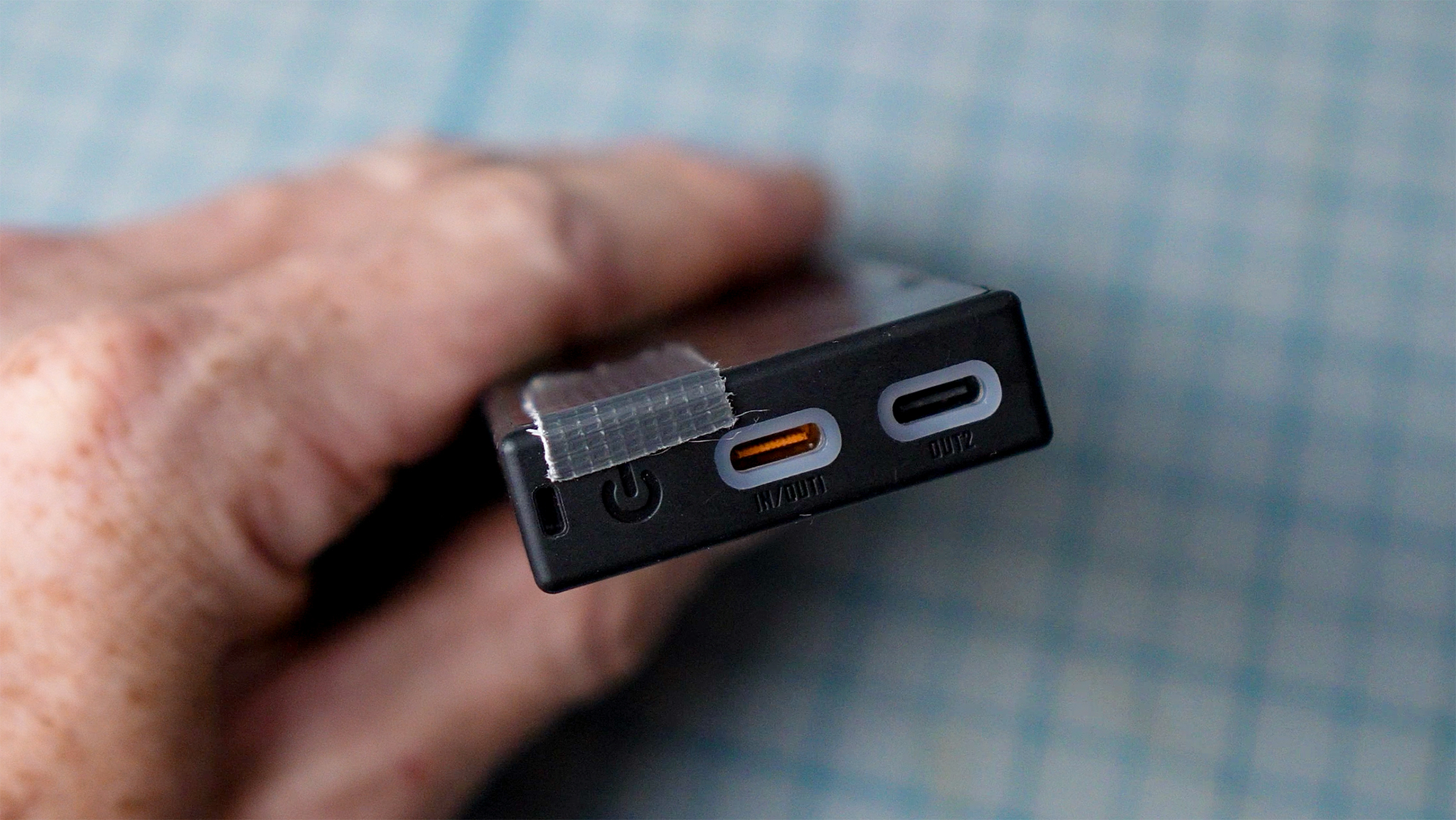
And finally the “both ports can be used to charge, but only one can recharge” is a little bit of a user experience frustration. Perhaps the recharge port should be more obvious?
Should You Buy the Nitecore NB 10000 Gen4?
If you’re looking for a travel power bank for devices as big as a modern smart phone, the Nitecore NB 10000 Gen4 is excellent. It’s made to be carried with you on adventures and not something that needs to be babied, care of it’s IPX7 rating. This is an excellent power bank for ultralight backpackers and one bag travelers. It’s lightweight means that bringing it with you won’t weigh you down. There are other power banks with similar features and battery capacity, but finding one as lightweight as the NB 10000 Gen4 is much more difficult.
Who Shouldn’t Buy the Nitecore NB 10000 Gen4?
If you have intense energy needs, like multiple devices that need to be recharged often, the NB 10000 Gen4 may just not have the capacity to really meet the challenges of such high powered devices. Roughly, this power bank can recharge a modern smart phone (with a battery with a 12Wh capacity) about two times before being exhausted and needed a recharge itself. This isn’t the power bank to bring along to supplement a laptop’s internal batter. As I write this, the Gen4 of Nitecore’s NB 20000 hasn’t been released (or announced), but the NB 20000 Gen3 is available, having twice the amount of capacity as the 10000.
Should You Upgrade from the NB 10000 Gen3?
So long as the weather resistance is adequate for you, there’s no real reason to race to replace a Gen3 you already own with the Gen4. My tests reveal that the performance of the Gen3 and Gen4 aren’t all that different, which the Gen4 edging out the Gen3 slightly on recharge speed, and being slightly more efficient once in Eco Mode. The bump up from IPX5 to IPX7 is an excellent upgrade and the interface of the Gen4 is a lot more intuitive than the Gen3.
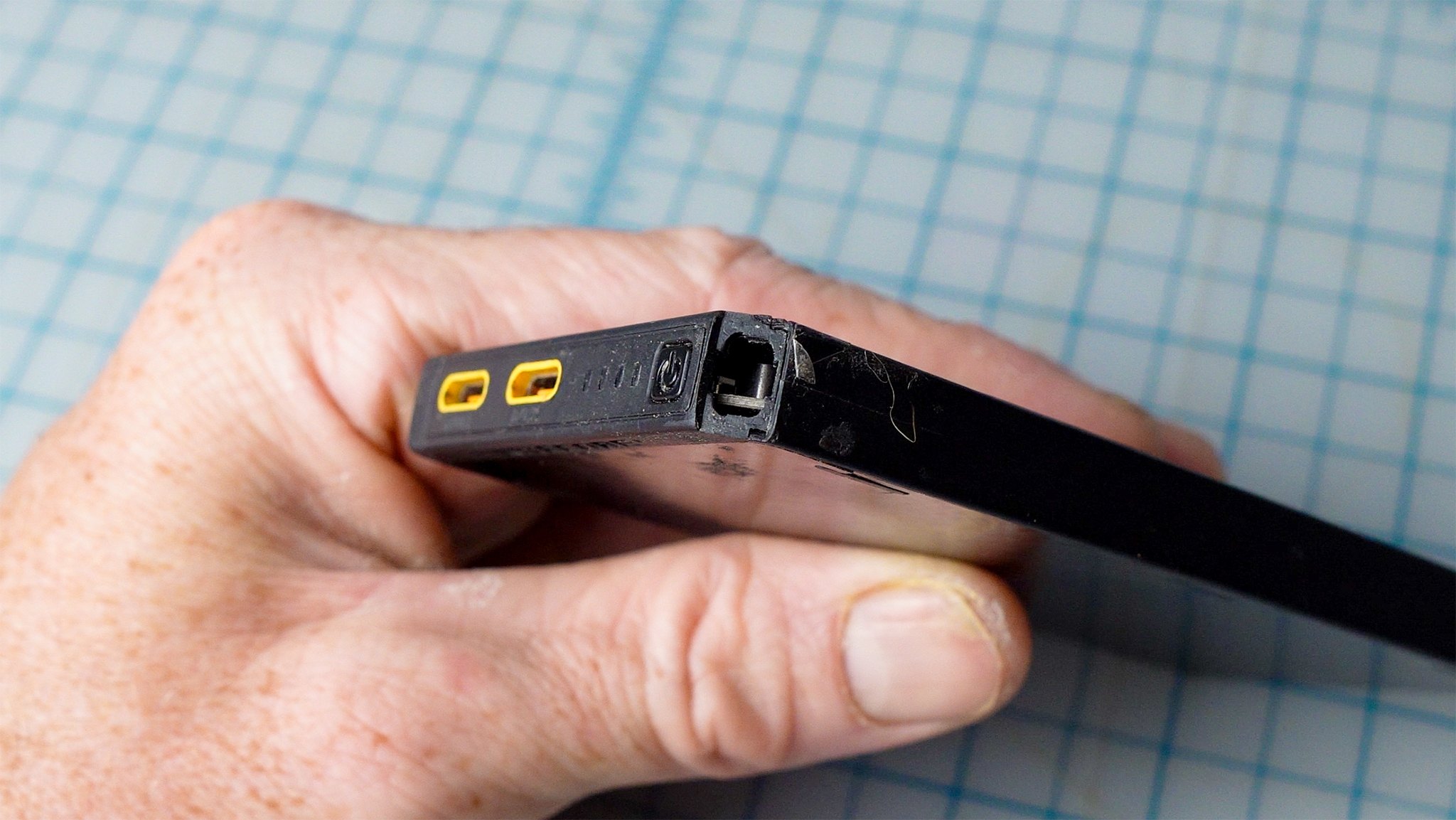
If anything, the form factor of the Gen4 is also subjectively better, being a little narrower and taller. The Gen3 also features rubber nubbins on the corner that seemed to be useful to take the impact if dropped, but I’ve had the problem of them coming off, which I need to then cover with some tape, so that’s a big thumbs down for me.
Should you Choose the Nitecore NB 10000 Gen4 over the Carbo 10000 Gen2?
For a very small weight hit, the Carbo 10000 Gen2 seems to be the stronger power bank out of the trio, but it’s really impossible to ignore the elephant in the room: price. The Carbo 10000 Gen2 is significantly more expensive than the NB 1000 Gen4 (or 3!), and that most likely will factor into your purchase decision. The Carbo Gen2 may only make sense if maximum weather resistance and durability is desired.
Thanks for reading.
And thanks for Nitecore for providing the NB 10000 Gen4 for evaluation. If you would like to see your product showcased on this site and on my Youtube channel, please contact me.